Woodworking begins with the joint.
Furniture assembly, joinery, panels, veneers and edge work place different demands on the bond. The wood or board construction, surface finish, assembly method and service environment all affect the starting point.
The product family should be considered against the particular joint and production sequence, not selected from the word ‘wood’ alone.
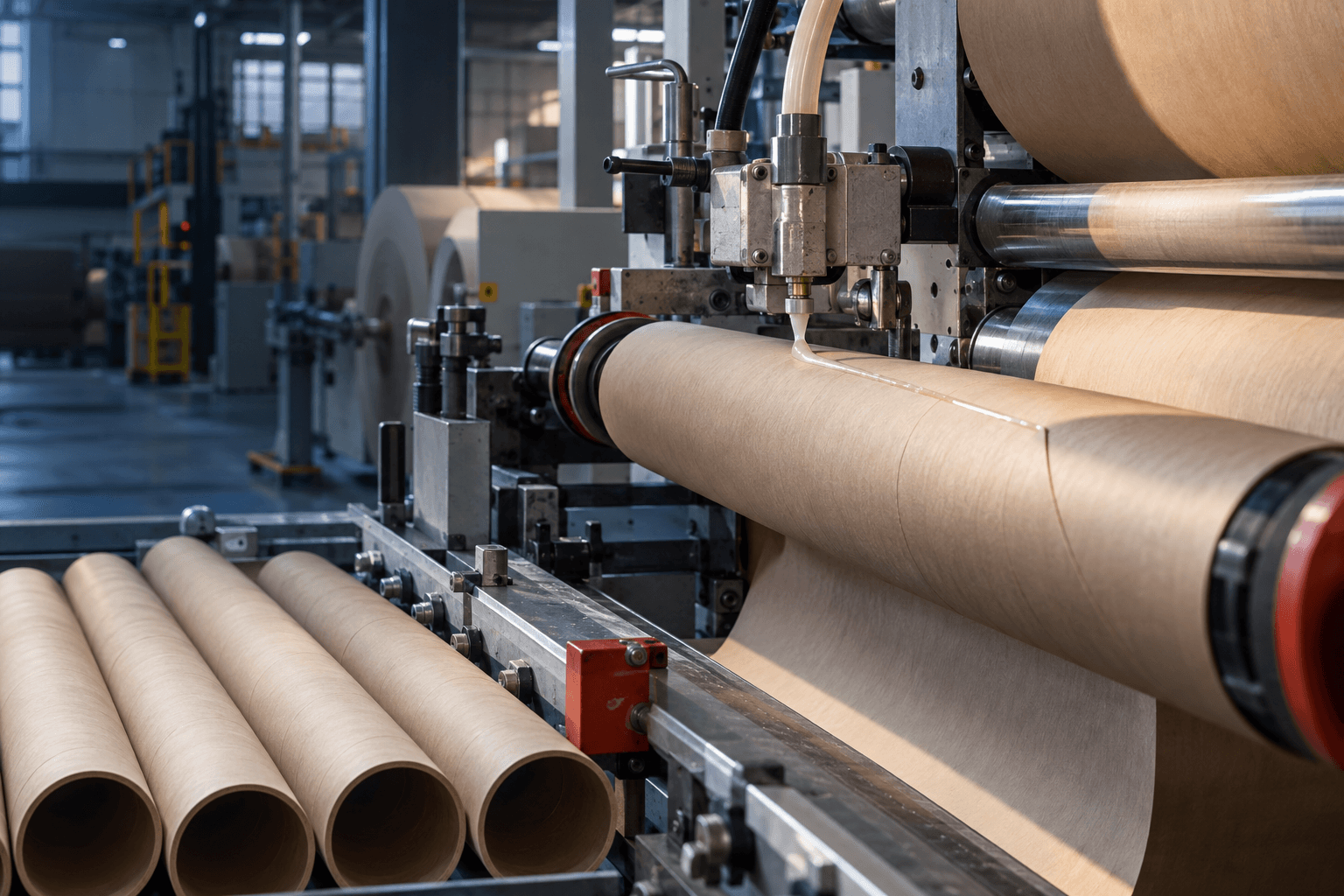
Paper conversion makes the line visible.
Paper and board applications include converting, tube winding, side pasting, bookbinding and lamination. Surface treatments, coatings, material variation and line speed can each change the adhesive requirement.
A specific application brief makes it easier to connect the adhesive family to the way the material actually travels through production.
Starch work connects to board-making contexts.
Modified-starch adhesive families are used in corrugation and related paper-board contexts. The relevant discussion is the construction being made, the application method and the conditions in which the board needs to hold together.
For each material group, testing and product instructions should remain tied to the selected system rather than assumed from a broad category.